ADA Mobile Bathroom Rental: Available Path Demands Made Simple
If you have actually ever before tried to position mobile bathrooms for an occasion, a public event, or a short-term work area, you currently know exactly how quick a straightforward leasing can end up being a logistics puzzle. The unit itself is just part of the photo. Where it sits, exactly how someone reaches it, and whether that path in fact benefits a wheelchair user are frequently the information that get missed out on till the last minute.
That is where accessible course needs matter.
When people search for an ada mobile bathroom service, they frequently focus on the system dimension, the door, or whether the vendor calls it mobility device obtainable. Those functions issue, however they are not enough on their own. An ada easily accessible portable restroom needs to be obtainable. If a person arrives and the only course is soft mud, a visual without a certified ramp, deep gravel, or a sloped makeshift system, the washroom might be present but not meaningfully accessible.
The federal baseline for this in the United States originates from the 2010 ADA Criteria for Accessible Style, as analyzed by the Department of Justice and the Gain Access To Board. For short-term configurations, consisting of mobile systems organized together at occasions, the accessibility rules still use. That shocks some organizers that presume "momentary" suggests flexible. It does not, at least not in the way many people hope.
What complies with is the sensible variation of the rulebook, fixated the part that causes the most confusion: the course to the restroom.
The path belongs to the restroom
This is the very first state of mind shift that makes the rest less complicated. An ada portable bathroom is not just package you rent. Access includes the experience of obtaining from the surrounding site to the entryway, entering the system, and using it with the called for clearances and steering space.
In plain terms, if the unit is practically certified inside however stranded at the end of an inaccessible course, the arrangement is still a problem.
The Accessibility Board's advice makes 2 factors specifically vital right here. Initially, obtainable portable bathroom systems must have an available course and entrance. Second, if ramps or landings are required, those aspects likewise need to follow ADA technical requirements. That is where numerous otherwise well-meaning arrangements break down. A site team puts a larger ada compliant mobile toilet beside a grassy area, notices a grade change, and improvises with plywood or a high temporary ramp. The thinking is practical, yet the result can be pointless or unsafe.
I have seen coordinators spend a large amount of time comparing system designs, after that position the obtainable one in the worst place due to the fact that it was "off the beaten track" or simpler for the delivery van. That typically implies a longer route, more unequal ground, or a course that becomes worse once foot website traffic and climate begin working on it. The obtainable device should be dealt with as a concern positioning, not an afterthought.
How lots of accessible devices are needed in a cluster
This concern turns up nearly whenever portable toilets are purchased in volume.
For clusters of mobile single-user commode units, at least 5 percent of the devices in each collection need to be accessible. The Access Board has made clear that this applies also at short-term events. So if washrooms are grouped together, the accessible count is not optional just because the installment just lasts a day or a weekend.
That 5 percent policy is one reason it aids to assume in regards to clusters rather than the whole site in the abstract. If bathrooms are split in between various areas, each cluster needs to be looked at by itself. A typical mistake is positioning all easily accessible devices in one main zone while various other bathroom groups throughout the site have none. The assistance factors you back to the collection itself.
For any person organizing ada certified portable washrooms, this is not simply a documents concern. It directly influences traveling range and self-respect. People must not have to leave the location they are using, cross a hard website, and look for the one obtainable alternative hidden somewhere else.
What "obtainable course" actually suggests on a short-lived site
The expression appears technological, however its practical significance is straightforward. The course needs to enable an individual with a handicap to reach the ada compliant easily accessible mobile washroom and enter it. If a ramp or touchdown is part of that route, it needs to meet ADA technical requirements. The same holds true for the entrance.
The legislation and assistance are outlined, yet on the ground, available path preparation commonly comes down to sincere monitoring. Ask yourself just how the path behaves under real problems, not perfect ones.
A route that looks penalty at 8 a.m. On a completely dry setup day might come to be hard by noontime if the ground softens, cables go across the course, trash can tighten the technique, or the line to neighboring concessions splashes into the steering location. Short-lived websites alter by the hour. Accessibility has to make it through those changes.
A few conditions deserve special attention because they are so commonly ignored:
- Soft or unpredictable ground between the major circulation path and the easily accessible unit
- Improvised ramps or platforms that were never ever checked versus ADA technical requirements
- Doors obstructed by fencing, stanchions, or crowd overflow
- Grade changes that appear small theoretically but create a real obstacle at the device entrance
- Accessible systems placed where service lorries can reach them, but users cannot
That last one is extra usual than individuals expect. Distribution gain access to and user gain access to are not the very same thing. A vehicle can back into locations that a wheelchair individual can not safely reach.
The entry matters just as much as the path
An ada certified mobile toilet can not stop being accessible at the doorway. The support is clear that mobile available devices need an accessible entryway, and the device has to additionally satisfy suitable toilet-room technological requirements. That includes turning space, fixture clearances, door steering clearances, and relevant grab-bar and water-closet clearance rules.
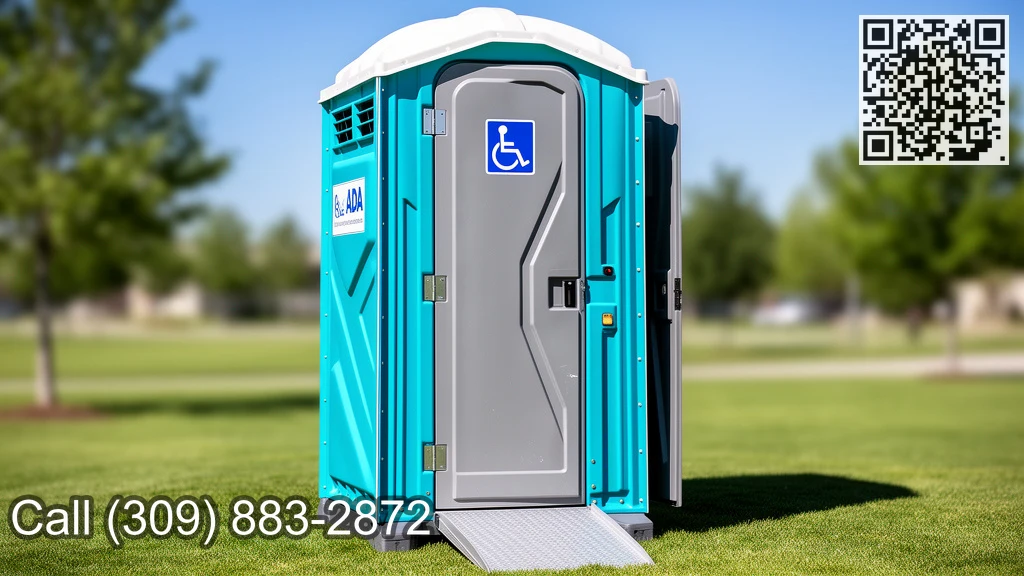
This matters due to the fact that some people use "ADA unit" as a generic label for any type of bigger portable toilet. Size alone does deficient certified. A spacious interior that lacks the called for clearances is inadequate. A wide-looking door that does not give the required handling room is not enough either.
This is one factor seasoned website organizers ask suppliers precise questions as opposed to relying upon broad sales language. Terms like ada handicap obtainable mobile restroom or ada-compliant mobile toilets get made use of in marketing, yet what you in fact require is a system that fulfills the appropriate technological requirements and is placed so those features can be used.
The practical lesson is easy: never different the unit from the positioning plan. They climb or fall together.
Why route preparation has a tendency to damage down
Most failures are not caused by bad intent. They originate from pressed timelines, changing site conditions, and a false sense that "close sufficient" will serve for one brief event.
Here is what normally takes place. The rental order is positioned, the count is validated, and the website map obtains changed numerous times. A food vendor needs even more space. Secure fencing shifts. The generator area increases. A phase vehicle takes over the flattest spot of ground. By the time the mobile bathrooms are provided, the available course that seemed apparent on the draft strategy no more exists in a practical form.
I have actually seen occasion teams solve twenty operational problems in an early morning and still miss out on the one course a mobility device customer would really need. That is not because ease of access is rare. It is since short-lived websites are busy, and information that affect a smaller share of participants are too often left for completion. The trouble is, obtainable route issues are hardest to repair at the end. When devices are gone down, secure fencing is set up, and website traffic patterns are set, every adjustment obtains more expensive and extra awkward.
This is likewise where empathy requires to move from language to format. A sign that claims "accessible" is not a politeness if the path is blocked, steep, or unpredictable. It becomes an irritation point.
The role of signs and identification
Accessible mobile commode units have to be identified with the International Icon of Availability. That seems basic, but it plays an important function on busy sites. People need to be able to locate the ideal device swiftly and confidently.
Still, the icon ought to match fact. If the unit is marked however the course is inadequate, you develop complication before you produce accessibility. Recognition functions best when it is coupled with thoughtful placement, noticeable strategy paths, and enough area around the entryway for real use.
This is particularly vital at festivals, metropolitan events, and other crowded celebrations where portable bathrooms are spread out across a large impact. People typically choose where to go based upon line length, exposure, and distance. If the available unit is concealed behind solution equipment or tucked at the rear of a row without clear strategy, the icon alone does not address the problem.
Temporary does not mean exempt
One of the more consistent misunderstandings in this area is that momentary arrangements obtain a pass. They do not.
The Gain access to Board has claimed that the 5 percent available device requirement puts on portable single-user toilet collections also at short-lived occasions. For general public mobile bathroom rentals, the obtainable unit demand stays in place.
There is a narrow historical difference worth noting because it in some cases gets mentioned out of context. The older 1991 standards consisted of an exception from the portable-toilet access scoping demand for systems at building and construction sites made use of specifically by building workers. That is not the like a basic exemption for all mobile commodes or all short-lived usages. It needs to not be stretched past what it says.
This matters since individuals often listen to "building website exception" and think mobile devices are extensively outside the typical guidelines. That is not a secure presumption for public-facing rentals, area events, fairs, parks, races, or similar temporary installations.
What to ask before the truck arrives
The most intelligent time to resolve obtainable path concerns is before distribution, when the website is still flexible. When you know the amount of units you require and where the collections will certainly be, the next action is much less regarding lawful jargon and even more regarding self-displined site planning.
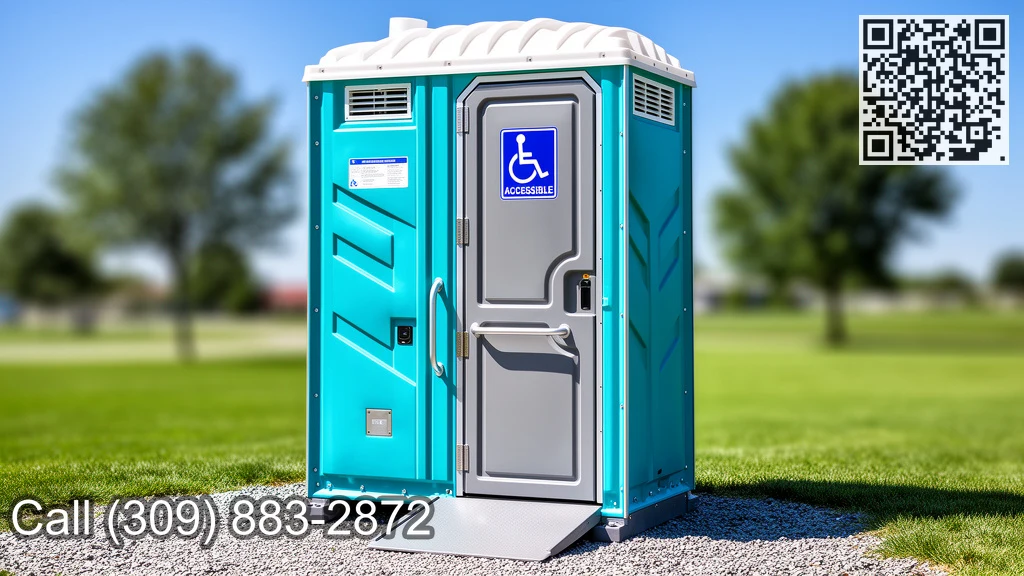
A brief pre-delivery review usually stops the most usual problems:
- Confirm which devices in each cluster are the easily accessible ones
- Walk the actual path to every easily accessible system, not just the route shown on a plan
- Check whether ramps or landings are needed and whether they will certainly comply
- Make sure the entrance location will certainly remain clear after fence, queuing, and supplier setup
- Verify the accessible device will be identified with the needed symbol
That walk-through matters greater than individuals believe. Drawings flatten troubles. A path that appears straight theoretically might cross rough ground, cut through a service lane, or count on an opening that will certainly later on be obstructed. A ten-minute walk can conserve a really public mistake.
A basic example from the field
Imagine a weekend arts fair with 3 bathroom clusters: one near the entrance, one close to the food suppliers, and one at the far lawn where efficiencies take place. The coordinator books sufficient devices overall, including ada compliant mobile commodes, and presumes the need is covered.
But if the available devices are all positioned only at the entrance cluster, the configuration may still fall short the fundamental logic of gain access to across the site. Someone spending quality time at the performance grass ought to not have to travel back throughout the fair because the only ada mobile bathroom was concentrated somewhere else. The 5 percent policy puts on each cluster, which pushes the coordinator toward a much more equitable layout.
Now add course conditions. The obtainable unit at the grass cluster is placed on lawn that seems firm throughout setup. Over night rain modifications that. By Saturday afternoon, the path is soft and rutted. The system might still be the right model, marked with the access sign, and technically roomy inside, however the course has actually come to be the barrier.
That is the part lots of people remember after the occasion. Not the requirements sheet, but the lived truth of getting there.
The wider compliance climate is tightening up, not loosening
Even if your prompt concern is just mobile toilets, it aids to understand the larger environment. ADA conformity is not https://pristineportablesil.com/luxury-portable-restroom-rental/ fading right into the history. Enforcement and conformity expectations continue to be active throughout industries, including areas past physical spaces.
A current example is the Division of Justice guidance expanding the deadline for certain state and city government internet and mobile access demands to April 26, 2027 for bigger entities. That is not concerning portable commodes directly, yet it shows the broader pattern plainly. Accessibility is being treated as a recurring functional responsibility, not a box to inspect once.
For event coordinators, districts, venue drivers, and rental organizers, the message is practical. Temporary facilities must be intended with the exact same severity as irreversible framework when the public needs to utilize it.
Where profundity comes in
The ADA requirements provide the regulating framework, however genuine sites still need judgment. Not every path concern is apparent from a distance. Not every cluster has optimal terrain close by. Not every supplier or location group talks the very same conformity language.
Good judgment starts with a couple of habits.
First, deal with the easily accessible system location as a first decision, not the remaining room. Second, examination the path under most likely problems, not simply the best-case scenario. Third, keep in mind that the entry and interior clearances matter as high as the course. Fourth, do not perplex a larger system with an ada-compliant mobile commode unless the technological requirements are in fact fulfilled. Fifth, be careful with exemptions. A slim construction-site difference does not erase general responsibilities for public usage mobile units.
That might appear stringent, however it usually leads to far better occasions and fewer last-minute scrambles. Availability planning tends to improve circulation, reduce bottlenecks, and make the website less complicated for everyone to navigate.
Making "easy" mean usable
People typically want a quick answer to ada portable commode requirements, ideally something that fits in a sentence. The most basic exact version is this: offer the required number of available devices in each cluster, make sure each ada mobile washroom is identified appropriately, and make sure there is an available path and entryway that comply with ADA requirements, including any type of ramps or landings that are required. Then see to it the unit itself satisfies the appropriate technological requirements for usage inside.
Simple does not suggest informal. It means clear sufficient to act on.
If you are setting up an ada portable toilet rental, the most effective inquiry is not simply "Do I have an ADA device?" It is "Can a person in fact reach it, enter it, and use it with dignity when the website is totally running?" That concern captures problems early. It likewise transforms just how teams make placement decisions.
An ada compliant portable toilet must not feel like a special accommodation concealed off to the side. It ought to seem like a normal, predicted component of the website, since that is precisely what it is. When the course is solid, the entryway functions, and the cluster is planned correctly, the entire configuration ends up being quieter, smoother, and much more humane.
And that is generally the mark of great accessibility planning. Not that people observe it as a feature, however that no one is locked out by a detail that ought to have been managed from the start.
 Ask ChatGPT
 Ask Grok
 Ask Perplexity
 Ask Claude
 Ask Google AI
 Ask You
Ends · SERGIORDIM177